Unearthing Kentucky's past
Step into the rich tapestry of Kentucky's history with our collection of captivating stories. From untold Civil War narratives to local heroes and pivotal events of the 60s and 70s, this is where Kentucky's soul comes alive. Join us on a journey through time, designed for history buffs, proud Kentuckians, and anyone who loves a truly good tale.
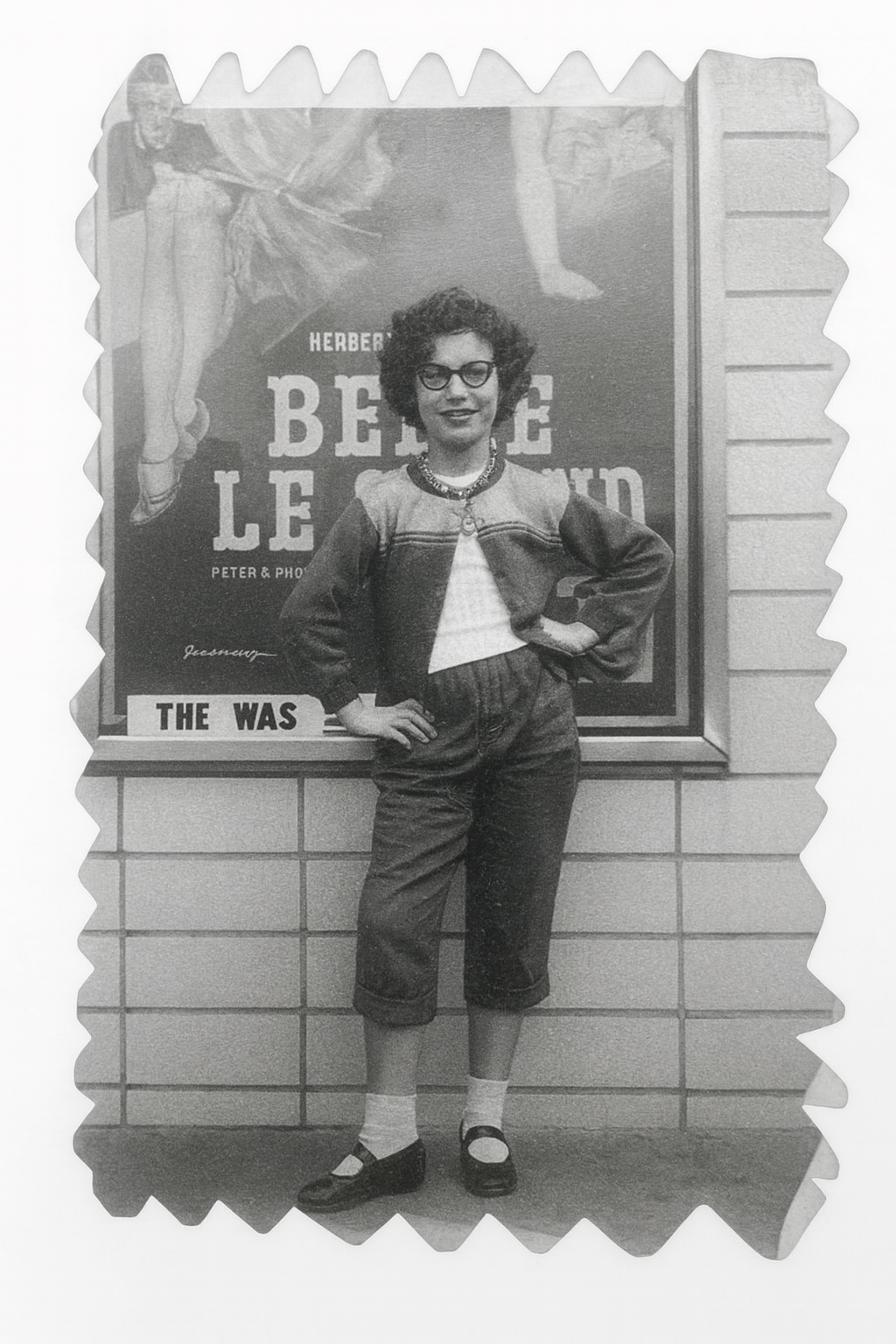
The Bonn Theater and the Rise—and Retreat—of Bonnieville
The Bonn Theater opened in the late 1940s to packed houses. Admission was a quarter, popcorn a nickel, and yes — life felt as idyllic as a Norman Rockwell painting. With the surge of postwar technology, housing boomed, automobiles boomed, and babies boomed too. Small-town America was approaching its zenith, and Bonnieville was no exception.
In its heyday, Bonnieville was more than a dot on the map. It became one of the most recognized speed traps in America, drawing the ire of Triple A. But it was also a destination: two motels and rental cottages near Bacon Creek, three service stations, several restaurants, multiple grocery stores, a furniture store, a post office, and even a skating rink.
But by the mid-1960s, Bonnieville faced a familiar crossroads. Just as the old road system had shifted in the 1930s — pulling business toward the newly designated US-31W and leaving behind what locals began to call “Old Bonnieville” — the town now faced a new challenge: the interstate.
Born from World War II technology and modeled after Germany’s Autobahn, the interstate system matched perfectly with America’s love of the automobile and the freedom of the open road. But for Bonnieville to stay relevant, it would have to move again.
This time, it refused.
Property owners adjacent to I-65 wouldn’t sell. The city limits couldn’t be extended. And by the early 1970s, as one local motel owner put it, “Progress has eaten up Bonnieville.”
By the early 1980s, the motels were closed. The service stations shuttered. All but two grocery stores disappeared. And then — the historic Bonn Theater closed its doors.
Several community efforts to purchase and preserve the theater failed. The floor was filled with concrete to level it for storage. Now, nothing remains.
A sad, if not inevitable, end to a bygone era.
Things could have been different — with just a little vision. But today, the abandoned Bonn Theater stands like a tombstone to a better time. (Special thank you to Lisa Steele for sharing her mother's picture and giving me this ideal.)
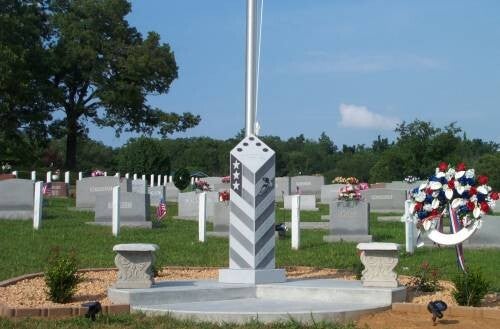

Kentucky's heartbeat: Heroes and eras
Beyond the battlefields, discover the vibrant spirit of Kentucky through tales of local heroes and the significant events of the 1960s and 1970s. These narratives paint a picture of resilience, change, and community, fostering a deep sense of place and connection to our shared heritage. We invite you to explore and participate in our growing story, designed for history buffs and anyone with an interest in Kentucky's past.
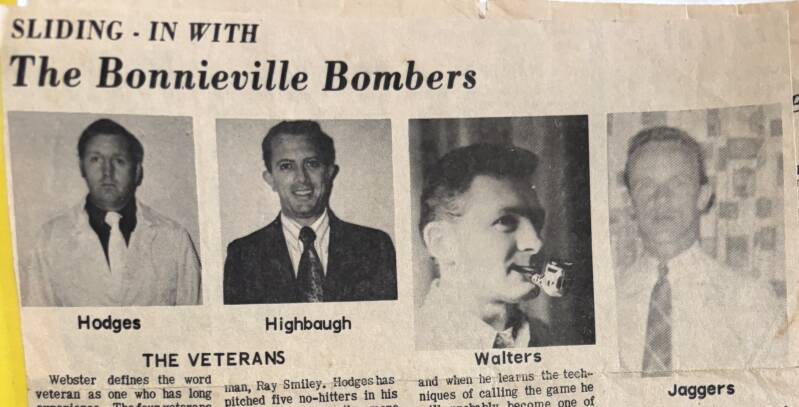
The Bonnieville Bombers
Every small town has its own legends — not the kind carved into monuments, but the kind passed around at kitchen tables and remembered on front porches. In Bonnieville, one of those legends wore cleats, carried a glove, and answered to the name Bombers.
The Bonnieville Bombers were more than a ball team. They were a gathering point, a reason for families to pack up lawn chairs and head toward a dusty field on warm evenings. They were the heartbeat of a town that took pride in its own.
The Veterans Who Held the Line
Every team has its anchors, and the Bombers were no different. Hodges, Highbaugh, and Walters were the steady hands — men who had been around long enough to know the rhythm of the game and the rhythm of the town. Hodges had a mind for strategy, the kind of player who could read a field the way some men read a newspaper. Highbaugh was the quiet defender, dependable as sunrise. Walters was the utility man, the one who could slide into any position and make it look natural.
They weren’t playing for fame. They were playing for Bonnieville.
Jaggers Behind the Plate
And then there was Jaggers — young, tough, and willing to take the hits that come with being a catcher. Every pitch started with him. Every play passed through him. He was the kind of player who showed up early, stayed late, and earned respect one bruise at a time.
Every generation has a Jaggers — someone who steps in with fresh energy and reminds the old hands that the story keeps moving forward.
A Town That Showed Up
People didn’t just watch the Bombers. They invested in them. Kids chased foul balls. Mothers packed sandwiches. Fathers leaned on the fence and argued calls like the fate of the world depended on it. The games were simple, but the meaning wasn’t. In a place like Bonnieville, a team could pull a community together in a way few things can.
Why These Stories Matter
Time has a way of smoothing out the details, but the spirit of those seasons still lingers. The Bombers represent something worth holding onto — teamwork, pride, and the belief that ordinary people can create extraordinary moments when they show up for one another.
You don’t have to remember every score or every inning. What matters is the feeling: the crack of the bat, the smell of the grass, the sound of neighbors cheering for their own.
Keeping the Bombers Alive
Stories like this don’t survive on their own. They survive because someone remembers. Someone tells it again. Someone cares enough to say, “This mattered.”
So here’s to Hodges, Highbaugh, Walters, Jaggers, and all the others who wore the Bomber name. And here’s to the town that cheered them on. Their season may be long over, but the echo of it still carries across Bonnieville if you listen closely enough.
Based on forth coming Book, Lost: The Civil War History of Bacon Creek KY
Introduction
I grew up listening to the old‑timers — my grandparents, great‑uncles, and the friends who gathered on front porches and around kitchen tables — telling stories about “the good old days” in Bonnieville. Those stories were handed down the way most things of value are in a small town: not from books, but from memory, from laughter, from the quiet authority of someone who lived it. Somewhere along that path, without even realizing it, my love of history took root.
To me, those stories always felt like a train moving along the tracks of time. You can sense its approach long before it arrives — that rising hum of something powerful drawing near. Then comes the moment when it rushes past you in a blur of steel and sound, leaving you standing still, caught between awe and the sudden awareness of your own place in time. And just as quickly, it’s gone again, fading into the distance, leaving only the echo of what once was.
The tales surrounding the Civil War at Bacon Creek Station were the ones that captured me most. Back then, you could still see the old tracks, a reminder that the train had come through. People spoke of desperate moments when ammunition ran low and log chains were fired from cannons. Others swore that a buried payroll — gold coins hidden in haste — was unearthed years later during the construction of U.S. 31W. Some even claimed the floors of the Jamison House were so stained with blood they had to be replaced after the war.
As a boy, I didn’t know what was true and what was embellishment. I only knew the stories stirred something in me. And when I finally set out to learn the truth for myself, I discovered that what really happened was far more compelling than anything I had imagined.
This is taken from my recently completed book-Lost: The Civil War History of Bacon Creek Ky.
This history was lost due to a name change that occurred in 1880. Now known as Bonnieville, the rich history of my hometown runs deep and had more than a small part to play during this nation bloodiest years.
The Widow Murrell’s Cabin
The scouts advanced cautiously along the railroad from Union‑held territory near the Nolin River. Roughly a mile and a half north of the Bacon Creek trestle, they took shelter in a solid log house identified in their account as belonging to the widow of John A. Murrell — the infamous outlaw whose name would later be immortalized by Mark Twain in Life on the Mississippi. Little is known about the woman herself or how she came to reside near Bacon Creek. Whether she sought quiet or simply circumstance brought her there, her cabin soon found itself on the edge of a war it had never been meant to witness.
Lieutenant Colonel Jones of the 39th Indiana Infantry had selected forty men for this reconnaissance — steady, reliable soldiers drawn largely from Company C. Their orders were simple: observe Confederate activity, avoid unnecessary engagement, and report.
But the valley had other plans.
First Blood —Company C Account
As Confederate scouts pushed northward into the contested ground between the Green and Nolin Rivers, they caught sight of Federal bayonets glinting above a slight rise in the road. Morgan’s men reacted instantly. They dismounted, slipped into the thickets on either side of the road, and prepared an ambush.
The Union scouts responded with equal discipline. Some deployed to the flanks and returned fire; others fell back into the Widow Murrell’s cabin, using its thick log walls as cover. What followed was a brief but intense exchange of small-arms fire — ten to twelve minutes of confusion, smoke, and shouted orders.
Basil W. Duke, Morgan’s brother‑in‑law and second‑in‑command, later described the encounter as resembling “a camp meeting or an election row,” a telling reflection of its suddenness and disorder.
But the Union men left their own record — one that gives the skirmish a sharper, more personal edge.
A firsthand account published in Jay County and the War recounts the moment with unmistakable pride:


The Widow Murrell’s Cabin. Site of the first skirmish near Bacon Creek, used by Union scouts for observation. (For Illustration Purposes only)
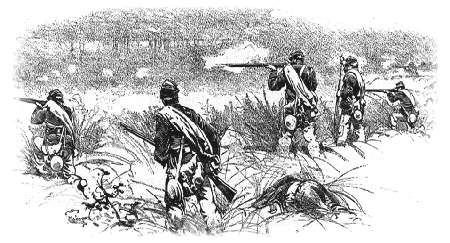
Depiction of Federal soldiers deploying as skirmishers — the same tactics used during the brief engagement near the Widow Murrell’s cabin.
“On October the 10th, Company C, 39th Indiana Infantry Regiment, struck tents and marched to Camp Nolin, now Glendale, Kentucky, twelve miles further south. The force collected at this camp was the nucleus of what afterwards became the Grand Army of the Cumberland. It was near this camp that the first blood of the Rebellion which fell upon Kentucky’s soil was shed. Forty picked scouts — Jefferson Sewell and W. H. Blower among them — were sent out under Lieutenant Colonel Jones against a marauding body of 200 rebels near Bacon Creek. Taking their position in a log house, the residence of the widow of the notorious villain John A. Murrell, this squad, without receiving any injury, repulsed the rebels, wounding several. Sewell, by a timely step out of the cabin doorway, was saved from a rebel bullet.”
The account is remarkable not only for its detail but for its tone — calm, matter‑of‑fact, and quietly proud. It confirms what the Confederate reports also suggest: the Union scouts held their ground, inflicted casualties, and withdrew without loss.
A Shot Across Neutral Ground
The skirmish changed nothing on the map — and everything in reality. Bacon Creek remained unoccupied. The railroad still stood intact. Kentucky remained a Union possession. But the struggle for this seemingly unassuming scrap of land — let alone the state itself — was only just beginning, and both sides knew it. Soldiers had met in No Man’s Land, and the first exchange of fire had broken the valley’s fragile quiet.
The valley had chosen no side — but war had chosen it.
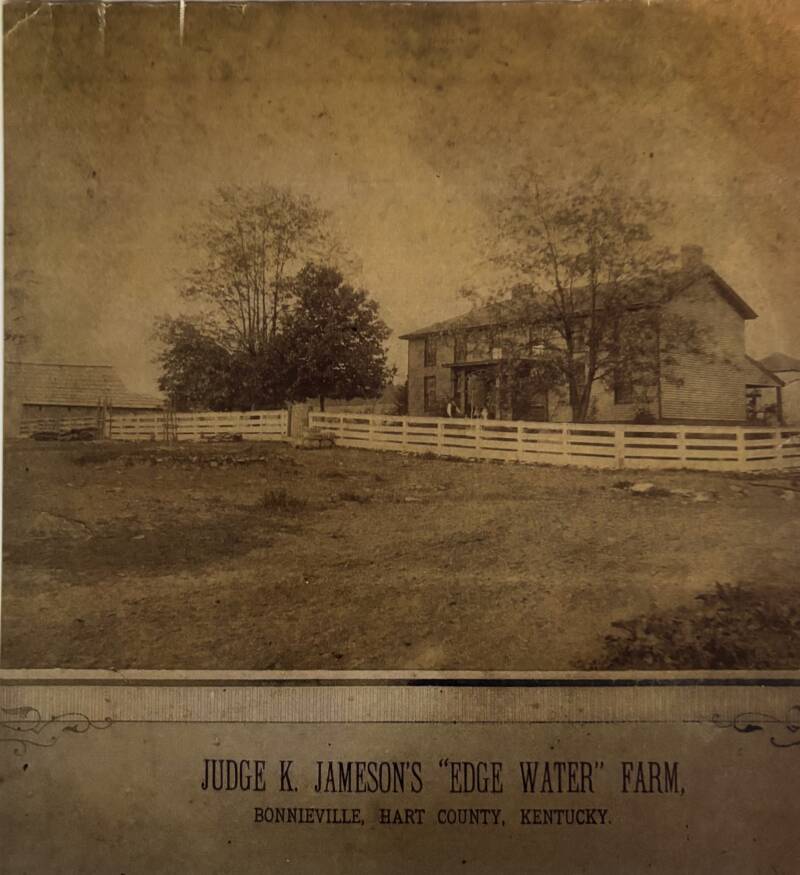
The Jameson House was built in the late 1840’s on Yankee Street in Bacon Creek, Kentucky, by Kendrick and Ellen Mud Jameson. At the time, the community was known as Bacon Creek; in 1880, the town’s name was changed to Bonnieville—a shift that would later contribute to the loss and fragmentation of much of the area’s Civil War history.
The original structure was a substantial ten‑room log house, built in a flat, New England style uncommon to the region. One of its most distinctive features was a wide central hallway that ran straight from the front entrance to the back of the house. This spacious passage earned the home its nickname, Hurricane Hall, because a strong wind could blow clean through it when both doors were open. The Jameson family loved music and entertaining, and the hall became a natural gathering place for guests, neighbors, and travelers.
Its size and location along the Louisville & Nashville Turnpike made the house a natural stagecoach stop and inn. Among its more notable guests was Jenny Lind, the famed Swedish singer, who stayed at the house in 1851 during her American tour and is said to have performed for fellow guests. Many years later, Thomas Edison reportedly stayed at the house while traveling the Louisville & Nashville Railroad line as a young man.
When the Civil War erupted in 1861, Kendrick Jameson—then the proprietor of the inn—became an officer in the Union Army. During the war years, the Jameson House was converted into a hospital. Over the next four years, several skirmishes were fought on the Jameson farm, which by that time encompassed approximately 1,100 acres along Bacon Creek.
Family tradition preserves a striking story from this period: upon learning that Confederate forces were approaching, Kendrick took it upon himself to unload Union supplies from a boxcar at the nearby station and hide them in the woods to keep them from falling into enemy hands. It was a small act of loyalty and quick thinking, but one that reflected both his character and the precariousness of life along the Louisville & Nashville line.
While the specific source for some details of Kendrick Jameson’s military service is unknown, multiple publications over the years have verified the general account. Jameson moved to the area in 1849, initially purchasing a 65 acre farm. Through additional acquisitions, he expanded his holdings substantially. His many civic roles suggest he was a highly engaged and respected member of the community. He served as a schoolteacher, a civic leader, and the host of a home that would become both a local landmark and a wartime refuge.
Add comment
Comments